

10 Best Saree Brands in India for Premium, Handloom & Traditional Sarees
Choosing a saree is easy. Choosing the right saree brand is not.
India has century-old silk houses, specialist Banarasi labels, contemporary handloom brands and couture designers. Some excel at bridal sarees. Others focus on regional handlooms, modern styling or collectible craftsmanship.
So, which are the best saree brands in India?
There is no single brand that is best for every buyer. A shopper looking for a traditional Kanjivaram may need a different brand from someone searching for a handwoven Banarasi tissue saree or a contemporary festive drape.
This guide compares 10 notable saree brands based on their specialisation, craftsmanship, heritage, range and suitability for different buyers. Instead of ranking brands only by popularity, it focuses on the question that matters most: Which saree brand is right for you?
Quick Answer: Which Are the Best Saree Brands in India?
Some of the best saree brands in India to consider include Nalli, Taneira, Raw Mango, Ekaya Banaras, Tilfi, Kankatala, Suta, BharatSthali, Sabyasachi and Umay Benaras.
Their strengths are different. Nalli is strongly associated with heritage silk retail and Kanchipuram sarees. Ekaya and Tilfi have deep Banarasi specialisation. Taneira offers access to many Indian textile traditions under one brand. Sabyasachi addresses the luxury couture buyer. Umay Benaras focuses on premium Banarasi handloom sarees and heritage-meets-contemporary styling.
The best choice therefore depends on the weave, occasion, budget, craftsmanship and buying experience you value most.
How We Selected the Best Saree Brands in India
“Best” should mean more than being popular on social media or appearing first in a search result. For this comparison, the brands are evaluated using six practical factors.
1. Craftsmanship
Does the brand demonstrate knowledge of the fabrics, weaving techniques and craft traditions behind its sarees?
2. Saree Specialisation
Some brands cover many fashion categories. Others build their identity around sarees or particular Indian textile traditions. A specialist may be preferable when you are investing in a specific weave.
3. Heritage and Sourcing
Where practical, buyers should be able to understand where textiles come from, how they are produced and which weaving traditions they represent.
4. Range
A strong saree brand should offer meaningful choices within its area of expertise rather than simply changing colours on similar designs.
5. Buying Experience
Product information, close-up photographs, assistance, customisation and transparent policies become especially important when purchasing premium sarees online.
6. Value for the Intended Buyer
Value does not necessarily mean cheap. A high-value handwoven saree can make more sense to a collector than a less expensive option that fails to meet expectations for fibre, weave or craftsmanship.
Best Saree Brands in India at a Glance
|
Saree Brand |
Best Known For |
Ideal For |
Positioning |
|---|---|---|---|
|
Heritage silk and Kanchipuram |
Traditional silk buyers |
Heritage |
|
|
Multi-region Indian textiles |
Buyers wanting variety |
Premium |
|
|
Contemporary Indian textiles |
Modern heritage dressing |
Luxury |
|
|
Luxury Banarasi textiles |
Contemporary Banarasi buyers |
Luxury |
|
|
Banarasi handloom |
Collectors and heritage buyers |
Luxury |
|
|
Regional Indian handlooms |
Wedding and traditional buyers |
Premium |
|
|
Contemporary, easy-to-wear sarees |
Everyday and modern styling |
Accessible-premium |
|
|
Multi-region handloom sarees |
Online handloom shoppers |
Accessible-premium |
|
|
Bridal and couture dressing |
Luxury bridal buyers |
Couture |
|
|
Premium Banarasi and heritage weaves |
Banarasi, wedding and occasion buyers |
Premium-luxury |
Important: This is not an absolute ranking. The best option changes according to the type of saree you are looking for.
. Umay Benaras – Best for Premium Banarasi Sarees with Personalised Styling
Umay Benaras takes a more specialised route.
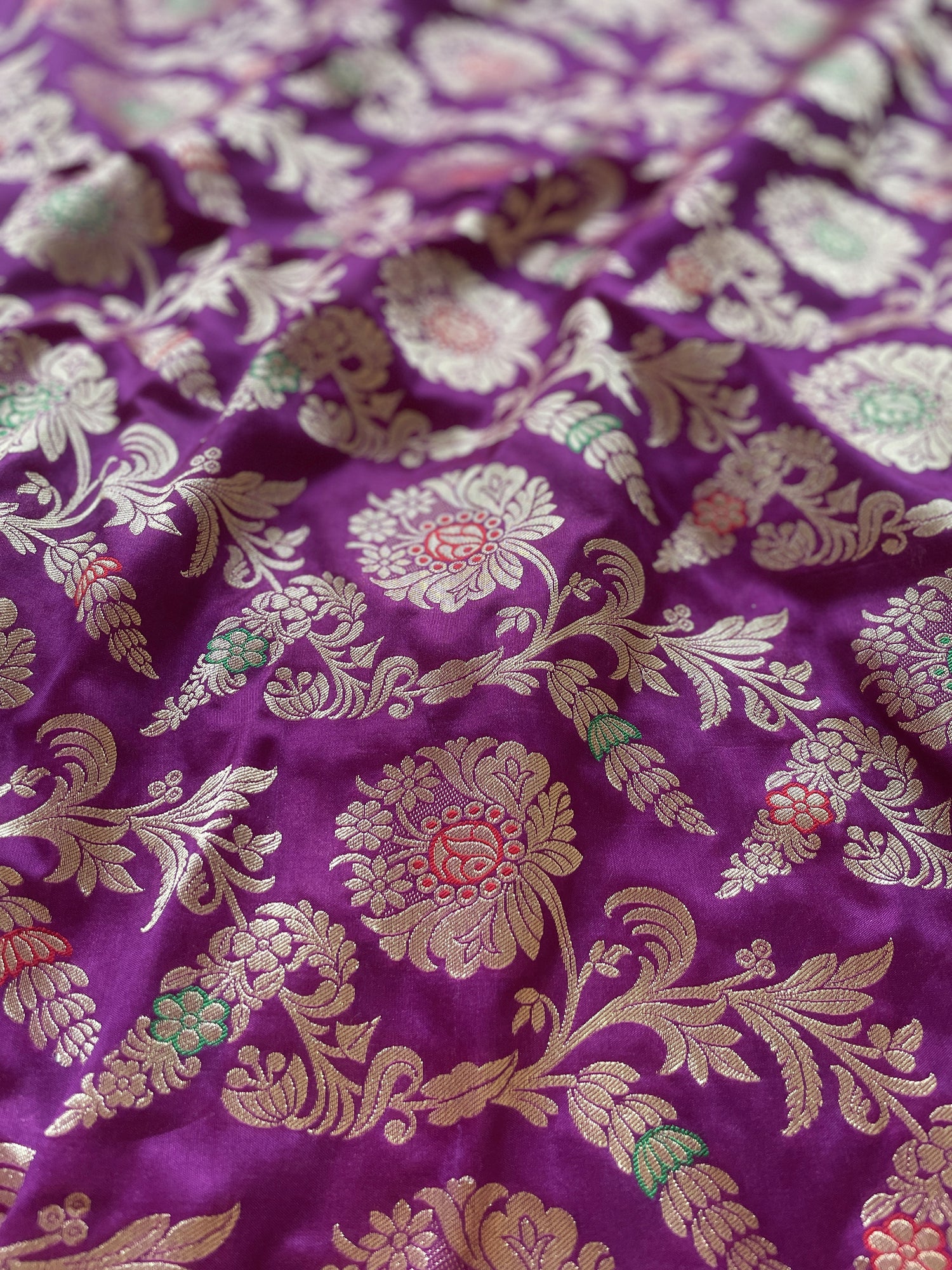
Rather than attempting to represent every saree tradition in India, the brand has built much of its identity around Banarasi sarees, bridal textiles and heritage weaves, while combining them with contemporary colours and cross-craft expressions.
The brand operates a flagship store in Kolkata and states that it has an in-house setup for hand embroidery and tailoring services. Its live Banarasi collection includes Katan, tissue, Kadhua, Jangla, Tanchoi and other traditional or experimental Banarasi expressions.
One benefit of buying from a specialist is depth. Instead of choosing only by colour, a buyer can compare fabric, weaving style, zari, drape weight and occasion suitability.
- Katan or tissue?
- Kadhua or another weaving construction?
- traditional zari or contemporary styling?
- heavy bridal drape or lighter festive saree?
- classic Banarasi or fusion-led styling?
Best for: Buyers looking for premium Banarasi sarees, distinctive handloom pieces and more personalised assistance around wedding or occasion dressing.
2. Taneira – Best for Exploring Indian Weaves Under One Brand
A shopper interested in Indian handlooms does not always want to visit ten different regional stores. That is where Taneira becomes useful.
Taneira, from the house of Tata, says it brings together textiles and craftsmanship from 100+ clusters across India. Its official brand story also describes “Weavershalas” created to support and work with weaving communities.
Its strength is breadth. Instead of specialising in only one saree tradition, it allows buyers to explore several regional crafts under one premium platform.
- Banarasi
- Kanjivaram
- Jamdani
- handloom silk
- cotton sarees
- regional festive sarees
Best for: Women who want a premium multi-region saree shopping experience rather than a single-weave specialist.
3. Raw Mango – Best for Contemporary Interpretations of Indian Textiles
Traditional does not have to mean old-fashioned.
Raw Mango has developed a distinctive contemporary visual language around Indian textiles. Its current official store spans saris, garments and craft categories including Varanasi brocade, Chanderi, ikat and tie-and-dye.
Its appeal is strongest for buyers who appreciate clean styling, unusual colour choices and modern presentations of heritage textiles.
- contemporary weddings
- understated luxury
- statement colours
- design-led wardrobes
- modern interpretations of Indian textiles
Best for: The buyer who loves Indian craft but wants a distinctly contemporary aesthetic.
4. Ekaya Banaras – Best for Contemporary Banarasi Luxury
For buyers specifically researching Banarasi saree brands, Ekaya deserves consideration.
Ekaya describes itself as a 120-year-old, fourth-generation family-owned business born in Banaras. It says its ecosystem empowers a community of more than 10,000 weavers while reinterpreting Banarasi textiles for modern consumers.
Its strength lies in treating Banarasi textile as contemporary luxury rather than limiting it to conventional bridal dressing.
- Banarasi silk
- organza
- tissue
- contemporary Banarasi patterns
- designer-led textile experimentation
Best for: Buyers who want Banarasi craftsmanship interpreted through a modern luxury lens.
5. Tilfi – Best for Collectible Banarasi Handloom Sarees
Tilfi occupies an interesting space for serious Banarasi buyers.
Its current Varanasi saree collection describes handloom Banarasi sarees crafted by master weavers in fabrics including silk, cotton, tussar, organza and georgette, with emphasis on traditional handlooms and zari work.
Premium buyers increasingly want more than the word “Banarasi.” They want to know the silk, weaving construction, zari treatment and craft details behind the piece. Brands that provide this vocabulary can make comparison easier.
Best for: Collectors and premium buyers looking for high-end Banarasi handloom pieces with a strong emphasis on craft.
6. Kankatala – Best for a Broad Range of Traditional Indian Handlooms
Kankatala combines heritage retail with regional diversity.
The company traces its origins to the 1940s in Visakhapatnam and describes long-standing relationships with weavers across India. Its history documents an evolution from a small saree shop to a national handloom retailer.
That breadth can work well for families shopping across multiple wedding functions, where one person may want Kanchipuram, another Banarasi and another a different regional weave.
Best for: Wedding shoppers and saree enthusiasts who want access to several established Indian weaving traditions.
7. Suta – Best for Contemporary and Easy-to-Wear Sarees
Not every saree purchase needs to be an heirloom investment.
Some women want sarees they can wear to work, dinners, intimate celebrations or simply because they enjoy draping one. Suta positions itself around combining Indian weaving traditions with contemporary style, and its current brand story highlights a large artisan and weaver network.
Its appeal is largely about approachability: a saree does not always need heavy zari, bridal colours or an elaborate styling plan.
- younger saree buyers
- contemporary wardrobes
- lighter occasions
- workwear
- easy styling
- gifting
Best for: Women who want sarees to become part of their regular wardrobe rather than only wedding wear.
8. BharatSthali – Best for Exploring Regional Handloom Sarees Online
BharatSthali takes a multi-region approach to sarees.
Its official brand page positions the store as a platform bringing together textile designers, artisanal communities, weavers and artists, with sarees representing multiple regional traditions.
It is particularly useful for shoppers who are still discovering Indian handlooms and want to browse different traditions before deciding what suits them.
Best for: Online shoppers looking to compare a wide selection of regional handloom sarees.
9. Sabyasachi – Best for Luxury Bridal and Couture Sarees
At the opposite end of everyday saree shopping sits couture.
Sabyasachi’s official site currently centres major parts of its offering on womenswear, weddings, heritage and contemporary luxury. For a shopper considering a saree as part of a high-end bridal wardrobe, the evaluation criteria change.
Design identity, embroidery, styling, exclusivity and couture positioning can become as important as the underlying textile.
- luxury bridal wardrobes
- couture events
- statement occasion dressing
- designer-led sarees
Best for: Buyers for whom designer identity and couture craftsmanship are central to the purchase.
10. Nalli – Best for Heritage Silk Sarees
When discussing traditional Indian saree brands, Nalli is difficult to ignore.
The company traces its history to 1928 in Chennai and has built its identity around silk sarees and traditional textile retail. Its official history highlights a long association with pure silks, traditional sarees and generations of customers.
Its biggest strength is heritage. For shoppers who grew up buying silk sarees with their mothers or grandmothers, that continuity can be as valuable as the product itself.
- Kanchipuram silk sarees
- wedding sarees
- traditional silk sarees
- South Indian weaves
- classic festive drapes
Best for: Buyers seeking a long-established saree house with a strong traditional silk identity.
Which Saree Brand Is Best for You?
Instead of asking only for the “number one saree brand,” start with what you actually need.
Choose Nalli if: You prefer a long-established silk retailer and classic Kanchipuram or traditional sarees.
Choose Taneira if: You want to explore several Indian textile regions from one premium platform.
Choose Raw Mango if: You prefer design-led minimalism and modern interpretations of Indian textiles.
Choose Ekaya if: You want contemporary luxury rooted strongly in Banarasi weaving.
Choose Tilfi if: You are looking for highly specialised premium Banarasi handloom pieces.
Choose Kankatala if: You want several Indian regional weaving traditions available under one established saree retailer.
Choose Suta if: Comfort, contemporary styling and repeat wear matter more than formal grandeur.
Choose BharatSthali if: You want to discover a wide selection of regional handloom sarees online.
Choose Sabyasachi if: You are shopping within the luxury couture and designer bridal category.
Choose Umay Benaras if: You want premium Banarasi craftsmanship, distinctive weaving styles and personalised assistance.
What Should You Check Before Choosing Any Premium Saree Brand?
Brand recognition should never replace product verification. Here are six questions worth asking before making an expensive saree purchase.
1. What fabric am I actually buying?
“Silk saree” is too broad. Ask whether it is pure silk, silk blend, Katan silk, tissue silk, tussar, organza, georgette or cotton silk.
Silk Mark clarification: The Silk Mark Organisation of India states that Silk Mark labels are affixed to 100% pure silk products by authorised users. It also explicitly states that Silk Mark assures silk purity, not the purity or quality of zari.
2. Does the brand explain the weave?
A strong product description should tell you more than “beautiful premium designer saree.” For a Banarasi saree, useful details may include Kadhua, Jangla, Tanchoi, tissue, Katan, brocade, Meenakari and the zari treatment.
3. Are the origin claims clear?
Banarasi is not simply a decorative style. “Banaras Brocades and Sarees” is a registered Geographical Indication in India. Buyers should therefore look beyond a generic “Banarasi-inspired” description when origin and authenticity matter.
Official GI record: Banaras Brocades and Sarees – Application No. 99 is listed as Registered by Intellectual Property India, with the current registration shown as valid up to 3 July 2027.
4. Can you see the saree properly before purchasing?
Premium sarees should ideally be supported by high-resolution photographs, fabric close-ups, border and pallu details, blouse-piece information and drape photographs or videos. Online shoppers cannot touch the saree, so visual transparency becomes part of trust.
5. Does the price make sense for the craftsmanship?
Do not assume the most expensive saree is automatically the best. At the same time, extremely low prices deserve scrutiny when a seller is claiming pure natural silk, detailed handloom construction, complex motifs and premium zari.
6. Is the brand right for your occasion?
A couture bridal saree can be magnificent and unnecessary for a small festive lunch. A minimal everyday saree may not offer the visual impact someone wants for a wedding. Choose according to occasion, comfort, weave, craftsmanship and personal style rather than brand name alone.
Traditional Saree Brand vs Designer Saree Brand: What Is the Difference?
A traditional saree specialist usually puts the textile and weaving tradition first. A designer brand often puts the creative interpretation first. Neither approach is automatically better.
A textile collector may care deeply about whether a Banarasi saree uses Katan silk, Kadhua weaving and a particular zari treatment. A couture buyer may care more about the designer’s visual language, embroidery and complete bridal styling. Knowing which type of buyer you are immediately makes the search easier.
Which Saree Brand Is Best for Banarasi Sarees?
There is no single answer because Banarasi buyers themselves have different priorities. Ekaya, Tilfi and Umay Benaras all place substantial emphasis on Banarasi textiles, but their positioning is not identical.
Ekaya is particularly relevant for contemporary luxury interpretations. Tilfi has strong appeal for premium handloom collectors. Umay Benaras is useful for buyers looking for a broad premium Banarasi selection that includes traditional weaves alongside contemporary and cross-craft combinations.
Explore: Umay Benaras Banarasi Sarees | Banarasi Tissue Silk Sarees | Banarasi Katan Silk Sarees
Final Verdict: The Best Saree Brand Is the One That Matches Your Saree
The best saree brands in India do not all solve the same problem. That is precisely why a simple number-one-to-number-ten ranking can be misleading.
If heritage Kanchipuram is your priority, your shortlist may begin with Nalli. If you want to explore textiles from across India, Taneira or Kankatala may make more sense. If you want modern design rooted in Indian craft, Raw Mango deserves consideration. For contemporary Banarasi luxury, Ekaya stands out. For specialist Banarasi handloom craftsmanship, Tilfi is worth exploring. For couture bridal dressing, Sabyasachi occupies an entirely different segment.
And for buyers seeking a premium Banarasi saree with distinctive weaves, contemporary experimentation and personalised finishing, Umay Benaras deserves a place on the shortlist.
The important question is not “Which is India’s best saree brand?”
Ask: “Which brand is best at the type of saree I want to buy?”
|
Looking for a Banarasi Saree That Feels Truly Yours? Explore Umay Benaras’ collection of Katan, Kadhua, tissue, Jangla, Tanchoi and contemporary Banarasi sarees curated for weddings, celebrations and heirloom wardrobes. |
Frequently Asked Questions
1. Which is the best saree brand in India?
There is no single best saree brand for every buyer. Nalli is well known for heritage silk, Taneira offers diverse Indian weaves, Ekaya and Tilfi specialise strongly in Banarasi textiles, while Umay Benaras focuses on premium Banarasi and heritage-inspired sarees. Choose according to weave, occasion, craftsmanship and budget.
2. Which are the best luxury saree brands in India?
Luxury saree buyers may compare brands such as Sabyasachi, Raw Mango, Ekaya, Tilfi and specialist premium handloom houses. “Luxury” can refer to designer exclusivity, textile craftsmanship or both, so compare fabric, weave, artistry and product transparency rather than price alone.
3. Which saree brands are good for Banarasi sarees?
Ekaya, Tilfi and Umay Benaras are specialist brands worth comparing when buying premium Banarasi sarees. Look at the specific fabric, weaving technique, zari, craftsmanship and origin of each saree before deciding. The brand name alone does not establish the quality of an individual saree.
4. How can I know whether a silk saree is pure?
Look for detailed fibre information and appropriate certification where available. The Silk Mark Organisation of India states that Silk Mark-labelled products sold by authorised users assure buyers of 100% natural silk. Remember that Silk Mark confirms silk purity but does not certify zari purity.
5. Which saree brand is best for wedding sarees?
The answer depends on the wedding style. Nalli and Kankatala are strong options for traditional silk shoppers. Sabyasachi serves the couture bridal segment. Ekaya and Tilfi address luxury Banarasi buyers, while Umay Benaras is relevant for premium Banarasi, Katan, tissue, Kadhua and distinctive wedding sarees.
6. Is it safe to buy an expensive saree online?
Yes, provided you check the seller carefully. Look for detailed fabric information, high-resolution images, close-ups, transparent policies, secure payment options and accessible customer support. For pure silk, an authentic Silk Mark label can provide additional assurance about fibre purity.
Editorial & Publishing Notes
NOT FOR PUBLICATION
These notes are included for the SEO/content team so the document can be handed directly to publishing. Remove this section from the public-facing blog page.
Links
- Premium Banarasi sarees — Main commercial collection
- Banarasi tissue silk sarees — Tissue collection
- Banarasi Katan silk sarees — Katan collection
- How to identify an original Banarasi saree — Existing Banarasi authenticity article
- How to identify pure tissue silk — Existing tissue authenticity article
- What is a tissue silk saree? — Existing tissue pillar/guide
- Umay Benaras Kolkata flagship store — Store/contact page
Source & Fact-Check Links
Nalli – Our History — Official history; Nalli states that its journey began in Chennai in 1928.
Taneira – About Us — Official brand page; 100+ textile clusters and Weavershala initiative.
Raw Mango – Official Store — Current official site; sari and craft categories including Varanasi brocade.
Ekaya – About Us — Official brand page; 120-year, fourth-generation family business and weaver ecosystem.
Tilfi – Varanasi Sarees — Official current collection; handloom Banarasi sarees crafted in Varanasi.
Kankatala – About Us — Official history tracing the business to the 1940s and its handloom/weaver relationships.
Suta – About Us — Official brand story and current positioning around weaving traditions and contemporary style.
BharatSthali – About Us — Official page describing its multi-region handloom and artisan platform.
Sabyasachi – Official Website — Current official site; womenswear, weddings, heritage and contemporary luxury.
Umay Benaras – Banarasi Sarees — Live commercial collection and current Banarasi range.
Umay Benaras – Reach Us — Official contact page; Kolkata flagship store and in-house hand embroidery/tailoring.
Silk Mark Organisation of India – FAQ — Official clarification: Silk Mark applies to 100% pure silk products and does not assure zari purity/quality.
Intellectual Property India – GI Application 99 — Official record: Banaras Brocades and Sarees is Registered; current validity shown through 3 July 2027.
District Varanasi – Banarasi Saree — Government district resource on Banarasi saree craft and regional heritage.