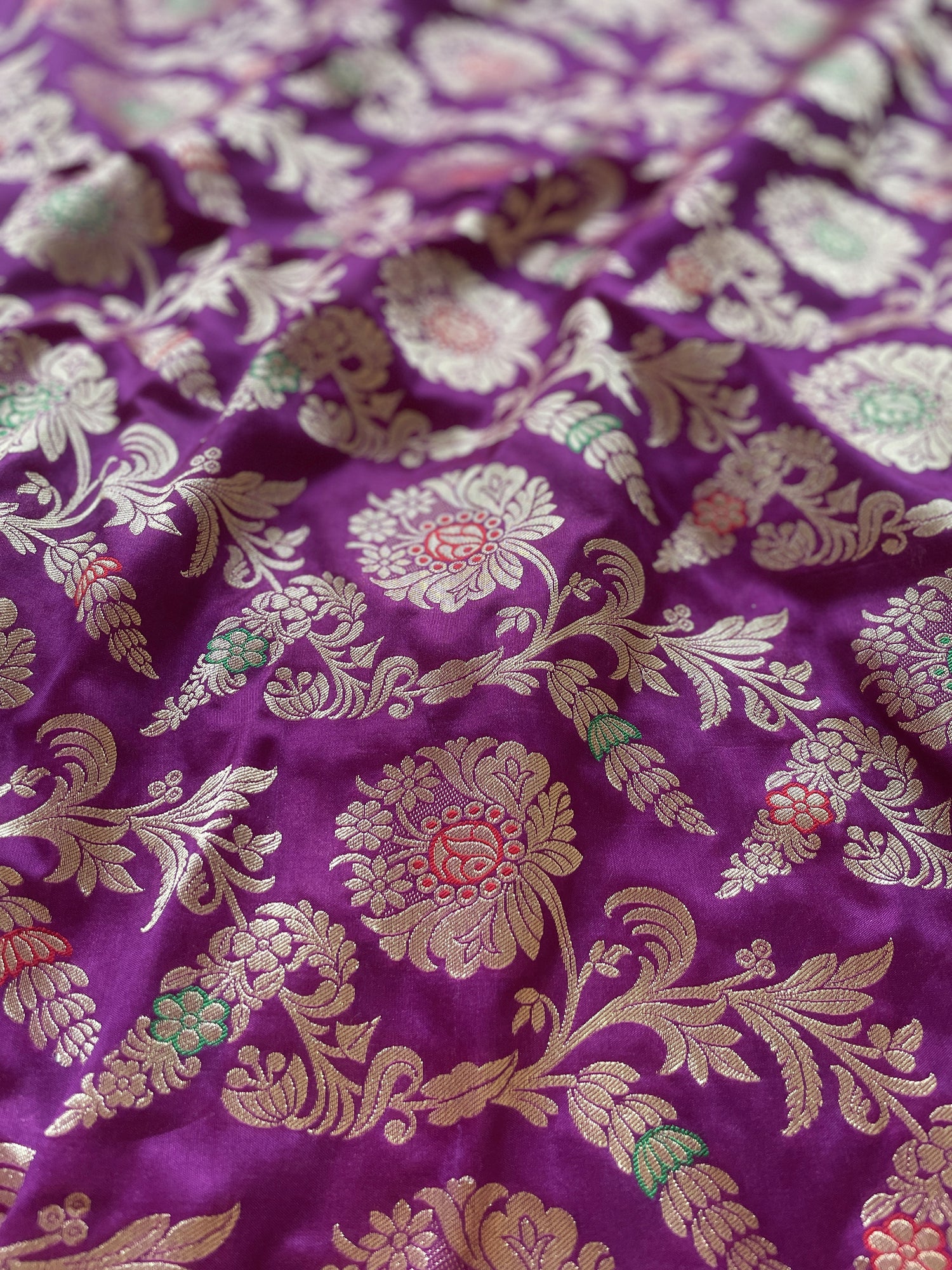


Few garments in Indian ethnic wear capture the imagination quite like a tissue silk saree. Celebrated for its fluid, metallic translucency and ethereal glow, it is a staple of luxury handloom culture. However, as the popularity of pure tissue silk sarees dominates wedding and festive registries, the market has seen an influx of synthetic, polyester-blended imitations.
Authentic curators like Umay Benaras prioritize purity, weaving natural mulberry silk threads together with genuine metallic zari. This creates a masterpiece that is incredibly lightweight and easy to carry around. If you are preparing to purchase a luxurious tissue silk saree, protecting your investment requires knowing how to separate genuine handloom art from machine-made lookalikes.
Here is a definitive guide on how to identify an authentic, high-quality soft tissue silk saree.
1. The Light Reflection & Luster Test

Authentic tissue silk is famous for its dual-tone sheen. Because natural silk warp threads are closely interwoven with fine zari weft threads, the fabric interacts dynamically with light.
-
The Real Test: Hold the saree under natural daylight and view it from different angles. An original saree displays a subtle, elegant shimmer that gently transitions in shade.
-
The Counterfeit Sign: Synthetic imitations look static, heavily reflective, or artificially glossy, almost like a sheet of metalized plastic under bright indoor lighting.
2. The Touch and Warmth Check

True silk is a natural protein fiber that possesses inherent insulation properties. When you hold an authentic handloom drape, its response to touch is completely unique.
-
The Real Test: Gently rub the flat surface of the fabric with your fingertips for a few seconds. A genuine soft tissue silk saree will instantly generate a subtle sense of warmth against your skin. Additionally, scrunching it lightly in your palm produces a gentle crunching or rustling sound.
-
The Counterfeit Sign: Synthetic polyesters feel cold, slippery, or stiff, and do not adjust to your body temperature when handled.
3. Examine the Zari and Reverse Weave

At Umay Benaras, the intricate designs and motifs are integrated straight into the handloom system. To verify a saree, you must inspect how it was constructed.
-
The Real Test: Turn the saree over to check its reverse side. Genuine handloom work features slight, natural irregularities or small loose thread ends where the weaver locked the pattern into place. If you scratch real zari softly, it reveals a red or warm silk core underneath.
-
The Counterfeit Sign: Powerloom copies look machine-perfect on both sides. Fake zari often uses synthetic filaments that show a harsh white or plastic core when scratched.
4. The Definitive Thread Burn Test

If you are verifying an heirloom at home or have access to a loose thread from the inner fringe or tassel seam, the burn test remains the ultimate indicator of purity.
|
Feature |
Pure Tissue Silk |
Fake / Synthetic Tissue |
|
Flame Reaction |
Burns slowly; self-extinguishes |
Burns rapidly; melts into a flame |
|
Aroma |
Smells like burning hair or feathers |
Emits a chemical, plastic-like smell |
|
Residue / Ash |
Leaves black, brittle ash that crushes to powder |
Melts into a hard, unyielding plastic bead |
5. The Ring Test (For Soft Fluidity)

Despite its metallic components, a genuine pure tissue weave retains incredible flexibility.
-
The Real Test: Take a small section of the saree body and gently thread it through a traditional finger ring.
-
The Evaluation: A high-quality soft tissue silk saree will glide through effortlessly without resistance. Heavy polyester versions are too stiff, causing the fabric to bundle up or jam inside the loop.
Shop Safely: Look for the Certification
In 2026, the absolute safest benchmark for purchasing pure ethnic luxury is demanding authentication. Always verify that your high-value handloom pieces come with an official Silk Mark Certification tag. Reputable brands ensure their raw materials undergo strict quality control checks before weaving. Authentic handloom tissue silk requires masterful skill, making it impossible to find at incredibly cheap or deeply discounted prices. Investing in a genuine piece means you are preserving a sacred, non-repetitive piece of Indian craftsmanship that will pass down beautifully through generations.