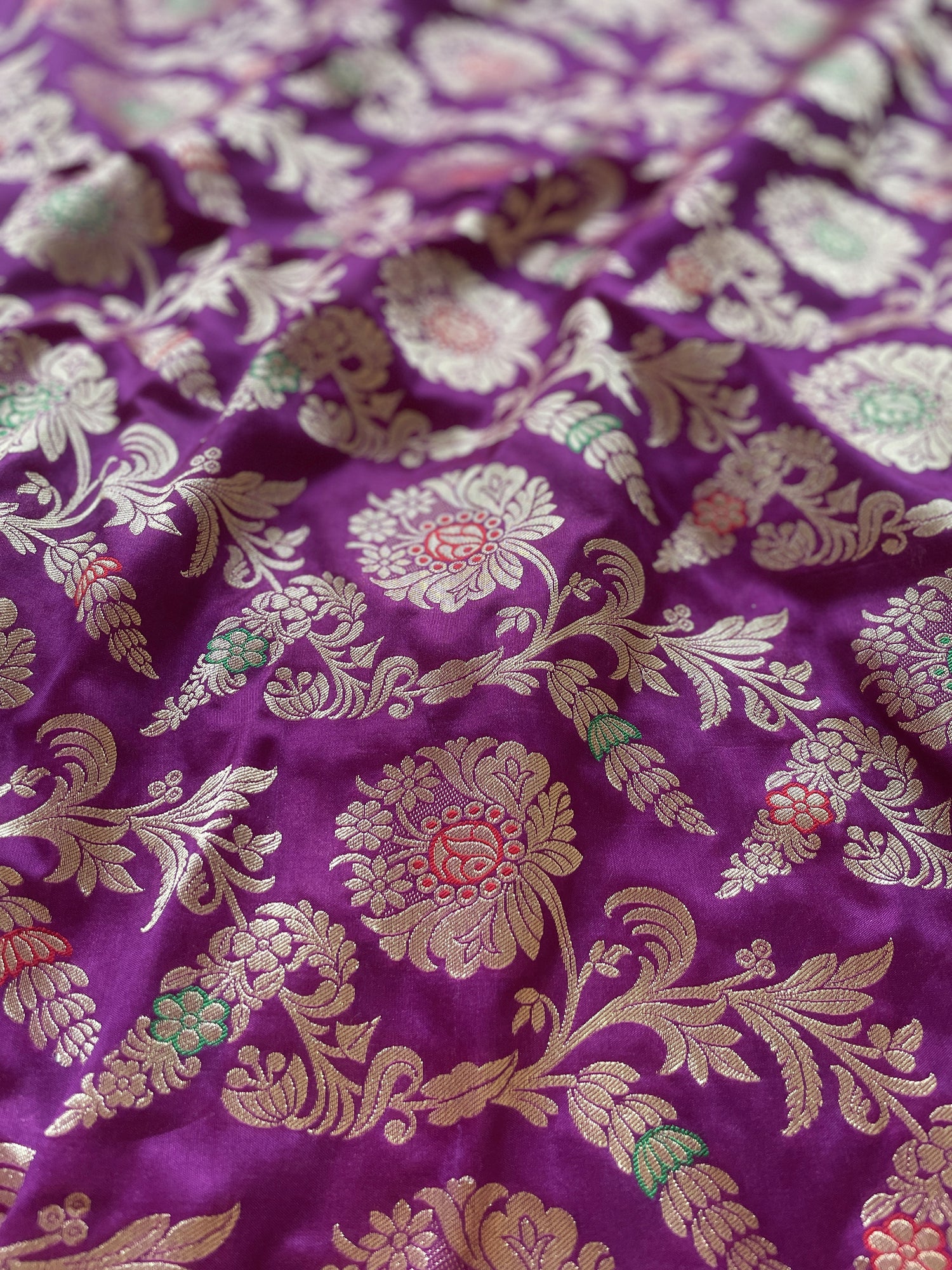


The Paithani saree is often called a "hand-woven poem in silk." For centuries, this garment has represented the pinnacle of Maharashtrian royalty and craftsmanship. While many modern wardrobes now favor the fluid drape of a georgette saree for casual events, the Paithani remains the undisputed choice for weddings, festivals, and heirlooms.
At Umay Benaras, we appreciate the intricate intersection of different weaving traditions. Just as we master the art of the georgette silk saree in Varanasi, we recognize the Paithani as a sister craft that shares a dedication to pure silk and gold. In this guide, we explore the deep-rooted history, the majestic designs, and the pricing of this legendary weave.
The Royal History of Paithani

The Paithani saree's origins can be traced back more than 2,000 years to Paithan (or Pratishthan) town, the capital of the Satavahana dynasty. Nestled on the banks of the Godavari River, Paithan became a trading centre, selling these expensive silks to the Romans for gold.
The first Paithani was made of cotton body and silk borders. But the design of the Paithani changed during the Mughal period, especially under the reign of Aurangzeb. Flower designs and the complete shift to a silk base gave the garment a royal touch. Subsequently, the Peshwas of Pune became patrons and the "asavali" (vine and flower) designs we see in a paithani saree today were perfected.
Design: The Tapestry of the Gods

One of the main differences between a Paithani and a georgette silk saree or a Kanjeevaram is its technique of weaving. The weaving technique is a "tapestry" style in which the warp and weft threads are interwoven in such a way that the pattern is the same on both sides of the saree.
The Motifs
-
The Bangadi Mor: A "bangle with a peacock". It is the most complex design and is seen on the best sarees.
-
The Muniyat: Subtle parrots on the pallu or border, representing elegance and nature.
-
The Akruti: Square almonds for a formal appearance.
-
Lotus and Vines: Motifs inspired by Buddhist art in the nearby Ajanta caves, these create a spiritual and ancient feel.
The Fabric and Feel
Unlike pure georgette sarees, which are favoured for their springy, light and sheer texture, a Paithani is opaque and heavy. It's background uses a "squaring" technique, creating a thick, rich fabric that can last more than a century, if well maintained.
Why Women are Opting for Diversity

Luxury ethnic clothing is a balance between traditional and comfortable. A paithani saree, for example, can be quite heavy as it uses a lot of gold and silver zari. And as such is ideal for the wedding ceremony.
But for pre-wedding ceremonies or evening parties, women are opting for a georgette saree or pure georgette sarees from Umay Benaras. Georgette is a "second-skin" fabric that is a slimming shape and is a beautiful contrast to a Paithani.
A combination of the two: the heavy Paithani and a georgette silk saree, is the key to a complete bridal wardrobe.
Understanding the Price Point

The cost of Paithani is based on two factors: the quality of the material and the time taken to weave.
-
Machine-made / Semi-Paithani: Not genuine and prices are typically between ₹2,000 and ₹8,000. They may be made with artificial silk.
-
Pure Silk with Tested Zari: These are real hand-woven but have copper zari. Prices range from ₹12,000 to ₹25,000.
-
Pure Silk with Real Gold/Silver Zari: These are heirlooms. These range in price from ₹60,000 to ₹5,00,000 based on the amount of work on the pallu.
A heavy Paithani can take anywhere between 12-18 months to weave, whereas a georgette silk saree can be woven in a couple of weeks. The paithani saree price is months of an artisan's work.
The Paithani saree is a testament to India’s enduring spirit of craftsmanship. From the courts of the Satavahanas to the modern aisles of umaybenaras.in, it remains a symbol of dignity. Whether you are drawn to the shimmering metallic borders of a Paithani or the delicate, floaty charm of pure georgette sarees, understanding the heritage behind the weave makes the experience of wearing it even more special.
FAQ
1. What is the history of Paithani saree?
The Paithani saree dates back over 2,000 years to the Satavahana dynasty in Maharashtra. It was a prized export to the Roman Empire and later flourished under Mughal and Peshwa patronage, evolving from a cotton-silk blend to the pure silk masterpiece we see today.
2. Where are Paithani sarees made?
Authentic Paithani sarees are primarily made in Paithan and Yeola in the Nashik district of Maharashtra, India. These regions house communities of master weavers who have passed down the tapestry-weaving technique through generations.
3. What designs are used in Paithani sarees?
Common designs include the Mor (peacock), Muniyat (parrot), Ajanta Lotus, and Asavali (vines and flowers). The borders often feature a Narali (coconut) or geometric square pattern, and the pallu is usually the most heavily decorated part of the saree.