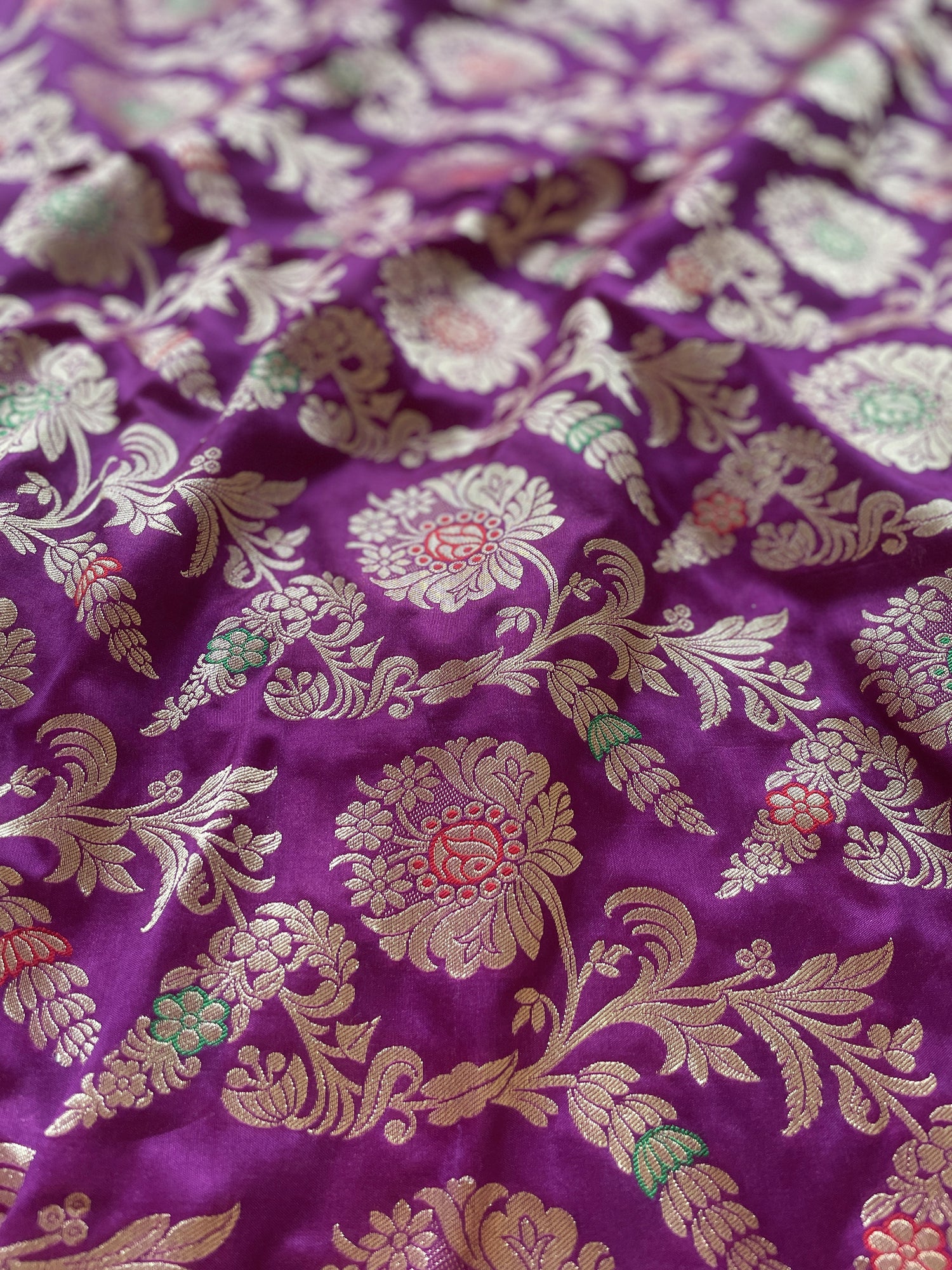


Originating from Patan, Gujarat, the Patola is widely regarded as one of India's most complex and prized handloom heritages. This textile art form relies on a painstaking double-ikat technique where both the warp (vertical) and weft (horizontal) silk threads are resist-dyed before they ever touch the loom. It takes months of precision calculations by master artisans to weave a single piece.
However, the rise of cheap, industrial replicas means the market is flooded with synthetic imitations. Buying an heirloom piece requires looking past superficial descriptions to verify true handloom craftsmanship. At Umay Benaras, we believe in absolute transparency and the preservation of authentic Indian weaves. This definitive guide details the precise physical tests, design hallmarks, and pricing realities needed to confidently verify a genuine patola saree.
4 Critical Tests to Verify an Authentic Patola
1. The Reversibility Test

The defining feature of a double-ikat handloom is its absolute reversibility. Because the design is dyed directly onto both sets of threads before weaving, the pattern is created internally as the fabric is built.
-
The Verification: Examine the back side of the fabric. On an authentic patola saree, the color intensity, design sharpness, and motifs look entirely identical on both sides.
-
The Imitation Red Flag: If the reverse side appears dull, faded, white, or displays loose structural threads, you are looking at a single-ikat or a machine-printed replica.
2. The Motif Alignment and Blur Check

True handloom ikats feature clean, intentional geometric alignment. Traditional patterns use classic motifs like Narivan (dancing women), Kunjar (elephants), and Popat (parrots).
-
The Verification: Look closely at the points where colors intersect. Authentic hand-tied threads show tiny, natural color variations at the edges of the motifs, but the overall alignment remains symmetrical and precise.
-
The Imitation Red Flag: A factory-made patola print saree uses chemical dyes stamped on top of a plain fabric surface. Under close inspection, printed replicas display fuzzy, bleeding edges, uneven graphics, or misaligned shapes that break the geometric flow.
3. The Thread Texture and Luster Test

Authentic regional masterpieces use premium, multi-ply pure silk yarns that balance structural firmness with a smooth drape.
-
The Verification: Feel the weight and texture of the fabric. Authentic silk has a rich, soft feel and a natural, elegant luster that catches the light beautifully—a hallmark guaranteed in every handloom piece curated by Umay Benaras.
-
The Imitation Red Flag: Synthetic polyester or art-silk alternatives feel slippery, unusually stiff, or rough to the touch. They often display a harsh, artificial shine under bright light.
4. Evaluating the Real Market Price

Handweaving a double-ikat masterpiece requires immense patience and skill. The rigorous process means these garments are priced as true luxury investments.
-
The Financial Reality: A genuine, handwoven Patan patola saree price reflects months of skilled artisan labor, typically starting from ₹1,50,000 to over ₹3,00,000 depending on the design's complexity. Single-ikat variations from Rajkot offer a more accessible entry point, generally ranging between ₹20,000 and ₹70,000.
-
The Imitation Red Flag: If you see a listing for a "pure silk Patola" priced at a few thousand rupees, it is undoubtedly a synthetic patola print saree or a mass-produced machine copy.
Technical Comparison Matrix
|
Quality Metric |
Authentic Patan Patola |
Rajkot Single-Ikat |
Printed Imitations |
|
Weaving Method |
Pure Double-Ikat (Warp & Weft) |
Single-Ikat (Warp or Weft only) |
Powerloom Surface Printing |
|
Reversibility |
100% Identical on both sides |
Slightly lighter on the reverse |
Clear front; faded back side |
|
Dye Integrity |
Organic, vegetable-based dyes |
Premium commercial dyes |
Artificial chemical inks |
|
Production Time |
4 to 6 months per piece |
2 to 4 weeks per piece |
Mass-produced in minutes |
Smart Strategies for Online Buyers
Shopping for a premium patola saree online requires extra care since you cannot physically touch the fabric. Follow these steps to ensure a secure purchase:
-
Demand Authenticity Certifications: Only buy from established heritage portals like Umay Benaras that provide clear Silk Mark certifications verifying fiber purity.
-
Examine Detailed Imagery: Look closely at macro-zoom product photos. Check the borders and reverse folds to confirm the weave pattern runs cleanly through the fabric.
-
Request Video Verification: Reliable heritage curators will gladly show you the saree via a live video call, allowing you to check the natural drape and quality before shipping.
Conclusion: Discover True Handloom Heritage at Umay Benaras
Investing in a genuine handwoven piece is about more than adding a luxury garment to your wardrobe—it preserves a rare, centuries-old art form. By learning to spot genuine double-ikat work, you ensure your investment supports real artisan communities and remains a timeless family heirloom.
Explore a trusted, carefully vetted collection of authentic Indian handlooms directly by browsing the selection at Umay Benaras today.